Thursday, July 23, 2009

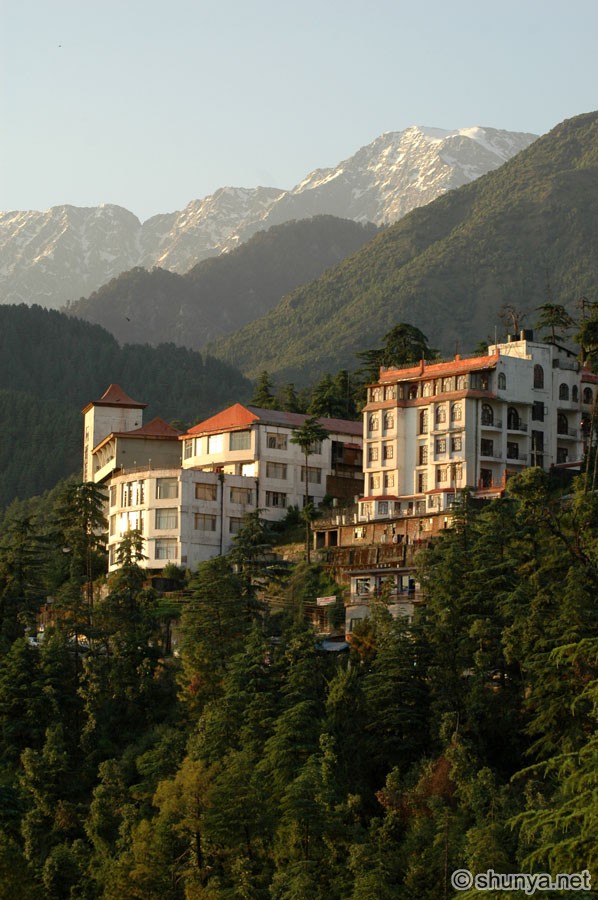
McLeod Ganj is where I was, the tippy top of Dharamsala. The bus ride crawling up there at 7am in the morning was probably one of the scariest things i've put myself through. Groggy, tierd and aching from an extremely bumpy bus ride, i was seeing some of the best scenery of my life, completely taken back by wonder while simultaneously dealing with gripping fear of looking out the window, not seeing the edges of the road but vertical height below. It felt like I was being taken up, and I had no idea where I would be dropped off, it felt like I was dropped off in the middle of nowhere.
Over the course of 4 days, I learned quite a bit about the place that's placed a stronger desire in my heart to go back to Dharamsala, to spend more time there. InshAllah I'll go there again, or find a way to go to stay there for an extended period of time.
I don't know if this will sound cliche, but the atmosphere there needs to be felt and experienced and its hard to coin it in terms. There's peace and serenity and you are enveloped by the gorgeous Dhauldar Range. but you are also enclosed in the energy and vibe of a 'refugee' home where the Tibetan Government in Exile resides. I've had pleasant conversations with vendors at bakery shops where their faces break into a beam of smile when they start talking about Tibet and talk about how long they've lived in Dharamsala. Both the co-existance of sweetness and pain. The bakery shop man asked me how I liked Dharamsala and when I said that I loved it, he responded with a smile saying " You should go to Tibet. It's so beautiful that if you go once you will never want to come back. The air is different". When I asked him how long he's been here away from Tibet, he said about 10 or 12 years. Goes to show how much he must always be yearning for Tibet.

Seeing how so many individuals have had to create a home for themselves away from home makes you realize of the things that you so readily take for granted. like the feeling of belonging to a country, being able to call your motherland your own with the utmost sense of liberty and ownership, being able to fly your flag, having an allegiance, having recognition. I have to say I don't know what it must feel like to not have that. To not be able to practice your own religion in a land where you come from, or not be able to utter the name of the person/being you consider god. I might have been able to mentally empathize with the 'situation' and the 'conflict' and pack it away in some brain compartment without thinking so much about it if my first exposure to the Tibetan issue came from an article in the news or if it came from a textbook. but my first exposure to this was a personal story and perhaps thats why the impact is much bigger. Looking into the eyes of a woman who had fled her home when she was 13, crossing the Himalayan range on foot with barely any food, making her way to India, not having contact with her parents for the next 10 years, all for the pursuit of education and freedom literally gave me chills.

The following is an email I had sent out to some friends my second morning of being there (which sort of captures my initial impressions of being there) :

i am in Dharamsala safe and sound (It's a city in northern India, in the state of Himanchal Pradesh), after a really really really interesting and not so positive experience getting here by myself. i took a train from lucknow to new delhi, where i was essentially flocked by a group of men to pay for this ridiculously expensive lodge and book a ticket with a travel agency that essentially ripped me off pretty badly. the bus ride in one word was terrible, in the middle of the night, i jolted up from a nap after hearing this incredibly loud noise that immediately made me think someone was shooting at our bus. no there werent any shooting. for whatever reason, the large front windshield of the bus had SHATTERED to pieces. and the driver just kept on going, and drove on for another 5 hours as if nothing had happened. i was also startled because, half of my body was completely wet. it was raining cats and dogs outside. and sort of raining inside the bus too, as in all this water was seeping in. the guy sitting next to me was being so obnoxiously flirty and gross that i had to yell in his face for him to stop. at like 1am, we switched buses in the middle of nowhere. and i got to dharamsala at 7:30 in the morning.

and it felt like i stepped into another country.

it's an india that i have not seen, tibetan monks everywhere, and tibetans everywhere, INCREDIBLE MOUNTAINS, scaling the skies, where you can't see the top because they are covered by clouds. everything is on mountains, and you essentially drive up the edges of it, literally one slight wrong move and there's no way you wont die. but people still manage to drive like crazy here! i realized later on that i'm lookign at a corner of the Himalayas. The scenery here..i could have never imagined because literally if you don't see it you can't imagine it. it's shocking amounts of beauty.

i felt completely ignorant my first day here. why are there so many tibetans here? the only thing i knew about dharamsala before coming here is that it's pretty, my friend is working here, and that the Dalai Lama lives here. that's literally all the information i had.

over coffee and a sandwich, i was with a friend, his friend, and this girl that was helping us look around, who is also working with the friend at the NGO where they intern. I thought she was from here, so when i asked her if she was, her response was "no i'm from Tibet". there's pictures of the Dalai Lama EVERYWHERE here, and "FREE TIBET" merchandise everywhere. I literally did not know anything about the tibet issue at all and all of this felt like a sensory overload coming at my face. my ignorant self was thiking "Free Tibet from what?". This girl's story gave me chills as she was talking to us about it. At age 13 she fled tibet, without telling her parents to come to India, this entails crossing ACROSS the Himalays, with barely any food, and this trek took them one month and 45 days. she said they would go without food in the cold for 3 or 4 days. some got terribly frostbitten, and a kid on their trek lost his vision due to health problems in the cold. her father is a farmer in tibet and she had no access for education when she was there. so at age 13 she made the decision to leave home without telling her parents to pursue education. she got here, and was sent to Southern India, and this was in 1995. This is 2009 and she has completed her Masters Degree. Talk about amazing. makes you look at education in a completley different way. Before comign to India she didnt' even know how to read. This is the part that gave me chills, she was alone in India and spoke to her parents for the first time after coming here after 10 years. she heard their voices after 10 years of being here by herself, and when she talked to her mother, her mother told her how everyone thought she was dead. she cant go back to tibet, so there's no guarantee of when she'll ever see her family again.

I've been reading a lot about the Tibet issue and have been learning a lot. It's been occupied land since 1949 by the Chinese, people there can't fly their flags, can't show any signs of following Tibetan Buddhism (The Dalai Lama to them is the 14th reincarnation of Buddha, essentially he is god on earth for them, the kind of connection that is felt for him is unimaginable), if someone even whispers the Dalai Lama's name or has a picture of him, they are automatically arrested. The way i'm understanding it, it's sort of like a cultural genocide. There's no recognition of TIbet from the UN, so that makes thinsg more complicated.

Besides all of this, visiting temples has been really awesome. There's prayer flags everywhere. and most people here are tibetan refugees. It's such a different kind of India, and like I mentioned befoer, it feels surreal and feels like I stepped into another country.
It's overwhelmingly beautiful to see the terrain as it is here. If I had not seen this, I would have never believed that people can make life work so well in this terrain, as in bazaars and markets and temples and residential areas, all along the sides of mountains. There are tourists, but not that much, and its reallyr REALLY peaceful, and it's been one of the most friendliest atmospheres I've experienced.

So all that discomfort getting here was definitely worth it :) I'm really really not ready to leave india, and i wish i could stay here for much longer, but i'm really happy that it's ending here in Dharamsala.

-Fahmida
a post is absurdly over due, i'm not sure how i never got around to making a post. i guess with sending emails here and there with scattered updates i neglected to comprehensively put things up here. I'm back in the States, and transitioning into Fayetteville from India is much harder and challenging then dealing with 'culture shock' in india. it's been a week nearly since coming back here, and it's funny how looking at old belongings and looking at how you left things before leaving, and re-evaluating very very familiar things can screw with your mind. i guess for 2 months i let myself completely forget about everything, and opened up to an experience that kept on taking surprising twists and turns. so coming back has been sort of a mental whirlwind, seeing things the old things bit differently now. really differently actually.

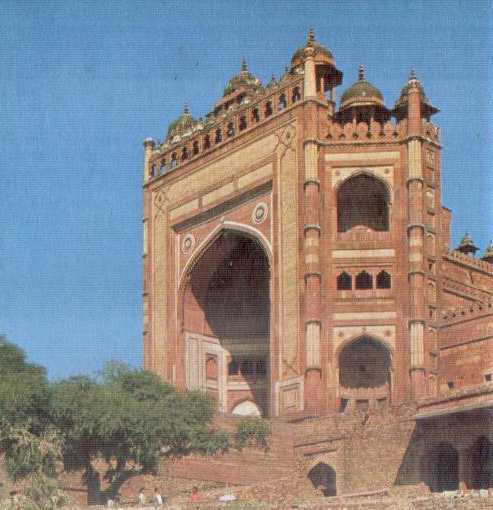
The last I wrote was about Lucknow. I was there for a total of 10 days, and although I had a great time staying with a friend of mine studying Urdu there (from UNC with a whole bunch of other American students) it would be a lie if I said I was having an awesome time in the city. We had gone to Agra, the city of the Taj Mahal, and we had gone to Fatehpura Sikhri. I hate to hate on a city, but Agra was the worst I had seen in India, in terms of pollution. I can't generalize for the whole city, but the places where we were was insanely overwhelming. Fatehpura Sikhri presented to us the most intense vendor harassment of our lives. Seeing this historically rich city was wonderful, especially exploring the architecture of these amazing structures. however, the flock of vendors (young, old, all sizes) was unfortunately a huge hinderance in being able to enjoy these sites. Below is a picture of Buland Darwaza in Fatehpur Sikhri where we were :


Abruptly, about a week before my flight back to the States, I decided to push for going to the mountains. Another friend from UNC was at Dharamsala, interning, while another friend from UNC had just flown into Delhi, and had wanted to go to the mountains.
2 days after having this thought of just making the journey up to the mountains from Lucknow, the result was 3 tar heels in the gorgeous peaks of northern India. I could not have ended my India trip in a better way. My last four days in India were spent in Dharamsala, which is a city that I completely completely fell in love with.

Friday, July 3, 2009


It's been a couple of days in Lucknow so far and I think I'm getting used to the city again. It's very different. My favorite thing so far has been riding the cycle rickshaws! Gosh I missed those! Bangladesh is filled with cycle rickshaws but I hadn't seen any at all before Lucknow here in India.
My friend and I went towards the old city yesterday, towards some infamous landmarks, like Imambara and a whole bunch of other stuff. Unfortunately it turns out that everything in the city, all the markets (at least on that side of town) is closed on Thursdays. Why Thursdays I'm not sure. There's been many instances when we go somewhere to find out that a random day of the week everything in that area is closed.
But we did manage to stop at lots of fresh fruits/vegetable stands! and that was AWESOME! pomegranates always always make me feel nostalgic so I couldn't resist and bought a couple. Outdoor, open bazaars to do groceries..that's how it should be. it feels wonderful.
Another impressive and memorable sight as we were going towards the old city :
My friend and I were on the rickshaw when we saw about 3 or 4 mango stands lined up side by side and we got really excited. Driving up the street we realized that there were even more mango stands, and even more mango stands. For literally a mile, it was a street with vendors and their mango carts, all different kinds, just lined up. and it kept on going and going and going!
mangoes filling up the side of the street? that's like heaven.


we'll be leaving to go to Fatehpura Sikri (a 10 hour car ride from here) and then going on to Agra tomorrow to see the Taj Mahal, and Sunday we are back.

more to come later :)

Wednesday, July 1, 2009

Saras Che

After a 26 hour train ride by myself in a cramped sleeper bunk (on the very very top) I am now in Lucknow, safe and sound in one piece. I didn't know I could do a straight shot 26 hour ride, but sleeping off 14 hours of it, trying to not wake up the toddlers around me made time go a little bit faster. trains in india are interesting places, and this is my fourth time going from one place to the other on these lovely carriages.

time in gujrat flew by so fast, and the last 10 days in the village (Vasna) has definitely been a trademark highlight of this summer. I didn't think I would get this attached to the life there, until I was leaving. The genuine warmth and kindness of people, and the inherent sense of community is inescapable and i miss it terribly. my train left at 5am which meant we had to leave the village at 3:30 in the morning. I didn't think anyone would be up at that hour, it would just be me and my friend driving to the station. Not only was the ENTIRE house up, so was the neighbor to bid me farewell!! i was truly overwhelmed by their sweetness.

I didn't really think or know at the beginning of my india trip that I would spend time in Gujarat at all, until the friend that i stayed with came to the rescue. his family just took me in. homecooked food, going from one relatives house to the other, and just going on mini excursions, all of it was immersion like no other. i've picked up scattered bits of gujrati (i said "saras che" to everything, which basically means "it's really good!") and have adapted a taste for the food as well! Everything about the experience was new, and it was a completley new zone for me as there was no connection to Islam at all. I saw things from a completley, completley new perspective, and let myself engage in it. And by doing so, I guess I realized a lot of things about my own ignorance about Hinduism. Up until now it has always been me trying in some sort of way explaining or justifying either Islam or Muslims or me as a Muslim, or whatever and what not to engage in dialogue to talk about stereotypes about my faith. Doing so I didn't realize that I had my own stereotypes about other religions, and there are other faiths that though I respect, i don't really "get". I stayed with a Hindu family, lived with them, saw the things that they did, and was completley isolated from my safe zone, and saw the community around them, and went to temples and had things explained to me. and all of that was such a learning experience! it was really beautiful.

My friend and I taught an English lecture to a classroom full of 10th graders at the local high school. 59 students in a non ac classroom in the heat, eager and beaming with excitement, had me on a high. We first sat in on an English class being taught by their own teacher to see and observe how the language was being taught and to get a grasp of their level. I was floored by the teacher and the way that she taught. I wish we had more professors like that at UNC! She had a beautiful way of not just covering the subject matter but connecting with the students. She spoke of loving even those who may hate us, helping those who don't help us, and going out of our way to understand people. One of my favorite things she said during the lecture was "We got our freedom through tolerance"

As soon as my friend and I entered the classroom, the entire class rose up in unison to say "Good Morning Sir, Good morning Madam!".
Madam?? I had to do a double take. I thought there might have been other teachers, but no they were actually speaking to us. We were there to help them feel more comfortable with speaking English, so we had mini exercises to get them to talk.
One of the things that sticks out in my mind soo clearly, is how their faces would light up and beam when I used to look at them and smile. They were all so eager! Before leaving Vasna, I went with my friend just to say good bye to that class, and all of them as they were leaving the classroom would individually say "Bye Madam".

I can't believe I only have a couple of weeks left in India! And I can't imagine going back to the States. At some point in my life (like soon) i really have to find some way to live on this side of the world for an extended period of time. It's like some strange sort of thirst to absorb everything about this place.

more to come later :)

Monday, June 22, 2009

people complain a lot about the traffic and congestion of mumbai, and how terrible it is. i dont know what they are talking about. i along with two other nourish folks went to mumbai for about four days and we LOVED every second of it. I think i've fallen in love with Mumbai.
It's such a cool city with so much, SO much going on. It was hard to come to terms with the fact that yes, for this leg of the trip i am indeed a tourist. a tourist is what i am. i am not doing anything 'productive' or working on anything, i am just absorbing as much as i can about the city with the little time that i had there. visiting places, shopping, going to bunches of art galleries, museums, walking along marine drive, EATING our little hearts out, attending a Kathakali performance, and watching our first bollywood movie in the theater (please do not watch Kal Kisne Dekha, it is a terrible terrible movie. the movie industry took a pretty bad hit with the multiplex strike for a couple of months so this was the only movie that was out while we were there. the theater was cool and that's pretty much it and i didnt know that everyone had to stand up before the movie started to sing the Indian national anthem, so that was kind of cool too. the movie is terrible.) is how we spent our four days there. the buildings, roads, architecture, of mumbai are amazing, as are the yellow and black cabs! cabs surprisingly saved us so much money and was so much more economical than rickshaws.
THE FOOD in mumbai was INCREDIBLE. I dont think there was any single meal where i was blah.
for anyone planning on going to mumbai, you MUST go to Swati Snacks. It's a cute little restaurant. and all they serve are the amazing indian street food, accept in a restaurant using safe water and all. it is AMAZING. i completely indulged in my pani puri and pav bhaji and a whole bunch of other stuff we shared. i'm not sure how many cups of chai i've consumed so far. i'm a chai addict. but that i always was.
Who knew Irani food would be good in Mumbai? We ended up going to the same Irani restaurant at least four times to get a delicious finger licking plate of Chelo Kabab.

Of course all of our experiences were good (minus one small incident in a cab). but that's because we took on the role of tourists to take out and absorb all the materialistic and fun happy things that Mumbai has to offer. One of the first things I saw in Mumbai was a woman lying down on the side of the road, half sleeping. her son, must have been about three years old, completely bare and without clothes, just roamed around the streets, walking from here to there, exploring like little kids do. He walked over to play with dirt, and made mounds of little miniature dirt hills and he kept on playing with them as he was defecating in the street. he finished his job and ran around some more and walked over to where his mom was to play with more dirt. I guess those streets were his home and he was extremely comfortable with where he was, no fear of the ongoing traffic, no fear of crossing the street as a kid that small. no, he was navigating his territory.
it's a weird irony that street beggars end up becoming objects. what i mean is, we've been told (and i also believe this) that giving money to beggars is never a good idea, after all you dont know what the money is going towards and perhaps you're adding on to the problem and these people are being exploited by a third party. They take on the role of beggars and because we don't respond to their pleas, and their constant nagging as they follow with their stretched out arms and sad eyes, they end up becoming less human somehow and end up becoming annoying objects that you ignore and try to dodge. you end up wanting to focus on anything but them because it's easier that way.
seeing the occasional beggar ends up becoming a part of the 'experience' of being here, you know because that's just how south asia is.

it's hard to reconcile these truths as you experience them simultaneously.

I'm in Gujrat now staying with a friend and his family. now it's experiencing a different kind of india, and as i've thought many many times, the REAL INDIA. a village, with a wonderful family. the graciousness of them all has been overwhelming and another challenge has been that i can't convey my gratitude in any way because i dont speak a lick of gujrati. great. for a person like me who talks as much as i actually do, it has been extremely frustrating (internally) to not be able to connect with the people that have taken me into their homes. i just smile a lot and gesture sometimes, but man language is such a huge crutch.

more to come later.

Saturday, June 13, 2009

bye bye udaipur

we completed our documentary after four weeks of interviewing, shooting, visiting the village (Malaaria), translating, and hours of editing. the end product : an 8 minute promotional documentary for the NGO we've been "working" with (Seva Mandir). At our first initial meeting with the senior staff members we realized that we thought we were here to do one thing (cover their fellowship program in a documentary as a way of promoting the idea of community leadership and sustainable development), and at the end of the meeting it was very clear that that was not the case at all. The members of the staff went on explaining how they want us to film the Jati Panchyat and the reforms it's made in the rural villages. Well, let me be more clear. They initially told us that we need to thoroughly cover what the Jati Panchyat is in depth, cover the intricate social complexities of what that patriarchial hierarchy means in the village, cover programs that Seva Mandir has implemented for women in Malaaria, cover the fellowship program, why it started how it functions, and the biographies of the fellows. in depth.

in the first 5 minutes of the film.

we were up front about how absurd that idea was and walked away from the meeting feeling like we have a more practical and clearer idea of what to do, and we were very excited to do it. all three village trips to Malaaria have been the most enriching experience in India so far. That afternoon sitting with Veni Bai, and Rodi Bai, listening to their stories, their struggles, their desires was eye opening and inspiring. they were so appreciative for our interest and our curiosity and welcomed us with such warmth. the language barrier kept us from understanding what the heck was coming out of our mouths, but the sentiments were the same.

we showed our final product (the co-editors of the film slaved over piecing the thing together, and cutting down hours of footage to what Seva Mandir wanted, a less than 10 minute video, for hours) to our volunteer coordinator, the supposed head person for this entire project, the day before yesterday. she was pleased. in fact, she used the word "excellent". her only feedback was "you repeat a couple of pictures, but the rest is fine"

great.

the next day, she called a staff meeting to have the rest of the staff members look at the video. they watched.

and then it was silent for a good 2 minutes before one senior panelist just started bashing the entire thing, and the entirety of the film. for the next 30 minutes, in hindi, they started telling us about how the film lacks focus, they were irritated that it was promotional for seva mandir, they didnt understand why we focused on women's issues, and why we didnt go further in depth with the fellowship. i think they forgot that there was someone on this side of the table who understood every syllable of what was being said. our volunteer coordinator usually translated for the rest of the group what ever is exchanged in hindi, and this time she didnt. it might have taken them by surprise when my response to their complaints or on point to what they had said in hindi. the overall response was sour, and we all were made to feel as if our time, efforts, money, passions, interest, curiousity, all of that was worth nothing.

i have no qualms about professional confrontation, and their reaction was so insulting that we told them everything that we had been asked to do, and how we had received absolutely no direction from any seva mandir staff. at all or in any shape or form.
resources in terms of doing research about this social issues were always limited, as in their library has tons of articles...locked away with missing and out of order keys. we were told that we have room for creativity and that we could frame the subject matter however we wanted. and then we were bashed for doing just that. they claimed that we had no objective and when i asked them what they had in mind for us, they could not answer the question.

if the knowledge of the staff members, people who have been involved with Seva Mandir for decades, and the skills of the students were combined and integrated professionally the experience would have been much more enriching for both parties. personally for me, the village experience, talking to those women and seeing their work, and their leadership far surpasses any of the internal structural weaknesses that Seva Mandir has. Our host parents had told us from the very beginning that all interns, especially from abroad who work with Seva Mandir leave with the same level of frustration. They have loads of brochures, pamphlets, articles and scholarly writing on how much they are doing and how much they are accomplishing. Though that gets them grants and international attention, this experience of being completely devalued for my time and something that I care about has left a very bitter taste in my mouth and I would never recommend anyone to work with them.

I don't regret any of my time here and in fact it has been extremely valuable and I have learned a lot : about the city, about the people and about the organization in terms of what they do well and what they don't. This experience, though they made it seem as if it was futile, was completely worth it.

Our time in Udaipur is up, and the serenity of the city grew on me a lot. Our group of 6 has dwindled down to 3. The 3 of us will leave Udaipur tomorrow night to go to Ahmedabad for a day and then spend about 4 days in Mumbai. Then the other 2 will leave and I"ll be in India for a couple of weeks more. Not sure where I'll be or what I"ll be doing. I'm hoping, InshAllah, I can survive :)

Wednesday, June 10, 2009

bah

Ex Dalits protesting in Punjab


Protests against attacks on Indian Students in Melbourne


i dont know how much the protests in australia are being covered in the States, but my goodness it is EVERYWHERE here, magazines, newspapers, breaking news on every news channel, non stop (another side note, every piece of news on the news channel seems to be breaking news, i don't fully get that). Obviously this has raised many many many conversations about racism. what's ironic is that as Indians abroad and here are protesting against racism, there are ex-Dalits (lowest caste : untouchables) who have converted to Sikhism protesting up north. Despite having have converted to Sikhism which does not recognize any form of caste at all, these individuals are still noted as Dalits and treated as such back in the cities that they and their families originally come from. I was reading the Times of India this afternoon and came across an article discussing this issue, titled "Race against caste", delving into somethig that I had brought up before. Is casteism the same as racism? Up for you to discuss.
The article ended with an interesting bam.
"..And there is one particular caste in India which, in some way, is as equally if not more oppressed than Dalits. It is a caste that is routinely burnt alive, killed in the womb, beaten, sexually violated, and often subjected to lifelong abuses and deprivation. It is a caste called women"

Tuesday, June 9, 2009

sweden should take over india

...one of the many interesting things i've heard other fellow travelers say.. this one happened to come from this middle aged Brit dude eating lunch at the same place we were eating.

so far we've ran across this younger brit dude who was traveling all across south asia and south east asia before 'settling down', we've met a 19 year old kid from Holland who just happened to be touring India after having taught in Nepal for 3 months. he wants to travel for a couple of more years before college. Couple of Argentinians who's been traveling for 16 months straight, and my favorite of all, this young girl who is orginially from China but studying in Boston who is now traveling all over india and thailand before heading back to china. her parents are under the impression that she's in las vegas, and have absolutely no idea that she's actually on the other side of the world.

Monday, June 8, 2009

chocolate balls and chai


i completely suck at keeping up with this thing and many many many things have happened since the last time i wrote. the only thing on my mind is the fantastic chocolate ball and the chai from our local bakery shop, Cafe Edelweiss, that I get everytime I go there with the rest of the gang. it's our place of unwinding. For some reason, amidst the chaos (not really of the city, but the chaos of everyone's frame of mind. Udaipur is not a crowded city at all. I'm going to Mumbai next week for a week, THAT i know will be real chaos) indulging in chocolate and chai makes you forget about everything else except wondering about why there's no cats to be seen anywhere at all, how the stray dog on the street just pounced on a pigeon for lunch and now is dragging it around the street looking for a place to sit down and eat it, and what in the world is aggravating the baby cow strolling around the cafe for him to be making so much noise.


Jaisalmer was incredible which is something that I just have to dedicate time to at a later time to delve into, but many other issues have surfaced within the past week. An excerpt from what I had written a while back :
-------------------------------------------
"You just have to let go of the little things. Otherwise the whole
experience becomes miserable...", our group leader was telling me on our walk back from work. I realized how much harder this bit of advice was progressively getting
for people on the trip. For some this has been the first international trip, and
definitely the first time in India for most. At first, the curiousity
of wanting to figure out a new place and feeling an ecstatic high at
the mere thoughts of realizing that you are abroad, in FREAKIN India, makes
everything new and exciting and makes you feel as though you have the
whole thing of being a global citizen and being an invincible traveler
figured out. everything is different and ‘cool’.
after tens of hundreds of gawking stares, lots of "hello! hello!
hello! hello!" from kids hollering at you, or following you, or asking for things or just trying to touch you, stepping on cow dung, having to unsuccessfully bargain
over every little thing and realizing that the color of your skin
completely gives away how easily you can be fooled and ripped off,
people start feeling a bit antsy. Everything starts to feel chaotic
lacking any 'systematic' order, the vegetarian food gets old and
people are just craving a burrito or a burger, and after dodging a
cow that happens to pass by them at the wrong time they are "F------
done with India". These are some of the sentiments that have surfaced
over the past week. i think this is what they mean when they say
culture shock.
there’s been comments made about how unprofessional and untimely
things seem and how because of that there doesn’t seem to be any
incentive for work. “why should we care if they don’t?”. “why are
things not ready on time?”. although i am no one to tell anyone else
to make an experience positive nor am i anyone to dictate what the
right or wrong way to feel is, i do feel that this is the exact
Americanized arrogant perspective that we are despised for. This
notion that as Americans we have things figured out and it’s so
“frustrating” to see other places not catch on, or not have it figured
out as well as we do. Comparing a different culture, a different system through the parameters of American lenses, and then judging it based on the 'discrepancy' is utterly stupid to me. I don't know, maybe that makes me being arrogant in my own right. I keep on wanting to say " is not America. This is India." No one in our group is ill mannered and no one has ill intentions, but everyone's inner frustrations (no matter what they are) are surfacing after 2 and a half weeks of being here and I'm definitely included in that equation.
People are swinging back and forth from high highs to low lows and everyone has a different take on what this experience is supposed to be like.
People have made comments about how confusing the caste system is and how strange it feels to be served and to watch servers be ignored. "It's so weird that no one even smiles at them or even acknowledge them". Somehow the mystery and the backwardness of the caste system was to be blamed for this, and since that's so unknown to us, it was that much more foreign and confusing. but really though? is it that foreign? not really, i don't think. it's just that people have a tendency of always thinking that THEY come from a better place when they travel elsewhere (this goes for Indians going abroad too. the notion of "oh we have our culture preserved. Americans are lawless and corrupt." yeah there's no caste system in america, but we do have a pretty heavy handed deeply rooted institutionalized system of racism. and that, is not even dicated in any religious text. as unfortunate as it is, the janitors, cafteria workers, and kitchen staff of most places come from a similar ethnic and socio economic background. we don't seem to mind it. but then when we come to india, omg this classism business is SO backward and the caste system seems to have so much to do with it. the reality of the matter is, we live in the same world and these problems are not that much different from the problems that we still need to fix in our home communities.

Interesting stuff. For some this short short trip to India is a confirmation that doing laundry from a bucket is not something they are cool with and they would not want to come back to india ever. for others it's a confirmation that this is exactly the part of the world that they would want to come back to again and again and again.
-----------------------------------------------------------

Wednesday, May 27, 2009

excursion #1

We will head out to Jaiselmer tomorrow morning at 8:30 am. I am extremely excited about this excursion, especially after the daily routine here that we've established so far.
Traveling within India is really expensive, so we've made plans and canceled them so many times that I'm glad that we've finally settled on something.
It's terribly hot everywhere and it is the off tourist season so things are a bit quiet.

There are tiny things about Udaipur that are really growing on me. The bright colors of doors here are very eye catching, at least to me. They are bright red, or bright green, or really bright blue or yellow with a hand painted picture of a Raja on a horse or a Rajasthani woman, and the entire door has decorative floral borders around it.
Or the tiny tiny little shops. the smallest spaces, like a bit of space underneath a stair case of some house is turned into a shop.

anyways, the day has been slow and slug and i've felt extremely unproductive. update on Jaiselmer coming up soon :)

Tuesday, May 26, 2009

Rani Bai

Going to Malaaria, the village, for the second time today everyone's moods were either testy or filled with suppressed frustration. It was an important day, we were going to the village again to not only sit in on the Women's Resource Center meeting but also to talk to female Jati Panchiat members, something that is integral and critical to the making of our documentary. How did they get involved, how were the percieved as they began their work in this traditional and male dominated system, what did they face and what changes do they want to see? these are the questions we wanted answered and the reason why we were venturing out again to meet with them.

of course, the most important days are the days when things never go smoothly and little things end up becoming unexpected obstacles. we were all running late because of all days today we were having trouble finding a rickshaw to get to seva mandir on time to catch the jeep that would take us to the vilalge. we got to seva mandir to find out that the interpreter that was coming with us was not there yet and the car that we were supposed to take was not ready. when we finally did get the car we realized that not everyone would fit in the car so one person had to stay behind.

we followed the same windy and dusty road to the village to go into that same room where the last meeting was held. Greeted with Pushpa ji (who is one of the head members of the Women's Resource Center and has worked with Seva Mandir for a while now to provide women in the village with health and education training) and we were introduced to Rani Bai, one of the female jati panchiat members and also an extremely experienced member of the community. dressed in a red and yellow colorful sari, with beautiful traditional bangles on her arms, hands and her ankles, she sat there a little shy in front of the camera. Then there was confusion about the translation part. Rani Bai would speak in Mewari, Pushpa ji would translate in Hindi and then Tanvika and I would translate that into English. A fairly long process.

Rani Bai spoke to us for a while telling us about different cases, her experiences, and her life. I was already in a testy mood from the morning and the lack of preparation from our part, our audio was screwed up so we could not hear the important things that Rani Bai had told us about her initial involvement and the camera was not charged so we ran out of film and did not capture the last part of her talking about specific cases. Trying to use alternate ways of video would be not only inconsistent with the rest of the footage but nothing could be heard from the ladies that were speaking. Everyone seemed lost and opinions kept on flying around in terms of what we should do. From little things of how long should Rani Bai speak before her speech was translated to trying to decide if we want to make them repeat everything they had said or just move on to the next interview and just make do with what we have, everything seemed to be up in the air. Perhaps it was this frustration, of knowing that some of these women had come from other villages, had traveled and walked miles to come see us and share their stories that made me speak the best hindi that i had ever spoken. through my broken vocab and broken sentence structure i was able to convey my sentiments and concers to Rani Bai and Pushpa ji about what was happening and what we needed to next.

We decided to just screw the tape and filming situation and just go on with the interviews, handwriting down everything that they were saying. It was extremely important for me that everyone get a chance to speak, because we could have just packed up our bags and had come back another day, but these women had walked miles just to come see us. I could feel the frustration of the other group members on our side feeling useless as they just sat there in the heat for 2 hours, 3 hours, not understanding any of the jibberish that was being said, be it Mewari and Hindi, and I could also sense the importance of going on and letting the ladies speak for as long as they want to, so that they feel that their work and their voices are being heard by us.

Rani Bai and another woman, Udi Bai had an amazing air to them. Here we are college kids doing a project in the summer in some far off country with our idealistic wishes and desires for "change". But these women, with their ages, have been fighting and have held on to their self righteous ideas of justice for years on end, organizing amongst themselves and forcing themeslves into systems to ensure that their concerns be heard. I was wholeheartedly inspired by their presence.

At the conclusion of this, we made time for the women that were in the room to also feel like they know us. the other team members on our side took turns stating their name and conveying their sentiments of how frustrating it is not be able to talk to them directly, how happy they are to be here working with them and making this film, and how beautiful and strong each of them were. the funny thing about being the middle person between these two groups is to see the irony in how the sentiments are completley reciprocated mutually, neither group seeing, or hearing rather that they are essentially saying the same things but just in differnet tongues. both groups wished to talk to each other directly but found it so difficult to do so. I would look directly into Rani Bai and Udi Bai's eyes, in awe of how much even the lines on their faces told about the hardships that they have encountered and the things that they have seen, and really listen to them. But then I would have to turn to Pushpa ji, because even though I feel like there is such a connectiong between them and us in the room, I have no idea what had come out of her mouth.

We told them how we felt that this kind of stuff, in villages, women and community members working together is something that we read about in books. to see these real faces and to hear their voices is incredible. and what did they say in return? they said that THEY had heard about these other countries, America for instance, in books and these places and the people living in these places only resided in their imagination, and for them seeing us be so interested in their work was inspiring.

The day had started off with a lot of obstacles and not with the most positive zeal. However the power and inspiration that emanated from that little room in that little tiny village of Malaaria between these women and us was completely worth feeling over losing the footage or not having everythign captured on tape.

As strange as this may sound, these local heroes to me are no less than other notable and worthy figures in history that have voiced and worked for their passion and dedicated their lives to their determination, like harriet tubman, like maya angelou, like mother teresa. i felt as though interviweing these women and being in their presence to hear their stories about how much crap they had to hear from society to organize together to form a more just community in their village is no less of a feat. Half jokingly Pushpa ji mentioned about the respect and authority that Rani Bai had made for herself. She said that if Rani Bai sitting in this room says something, then the person crossing the street would stop to listen to what she had to say.


We have a lot of work to do now. We have to look all of the stuff that we did get on tape and translate and have it typed out which might take hours. we also have to figure out what to do with all the notes of just hearing the stuff we heard from them and incorporating that into the video.

We will meet them again on June 7th for a Jati Panchiat meeting. We had stuffed ourselves back into the car, staggering ourselves to make room for everyone, and Rani Bai was still outside our window saying Namaaste, Dhannivad, and bye to all of us.

involving myself in this, of course i think about how i want to work in Bangladesh and this is exactly the kind of thing that I want to be a part of. And I keep on thinking of how AASHA can be a part of this.
I'll be plotting :)

Saturday, May 23, 2009

Jati Panchiat

Seva Mandir is based in Udaipur and amongst the many projects that they do, they work with the 200 villages that are here on the outskirts of the city. They have an incredible number of projects going on dealing with various issues in these rural villages. The partnership between Nourish International and Seva Mandir was the first and we're here to create a documentary for Seva Mandir.

I had arrived to Udaipur approximately 5 days after the other team members were here. Immediately the high of being in India had set me off in high spirits and I was excited to just absorb in the sights and sounds of this place. Going to Seva Mandir was interesting because I had absolutely no idea what to expect at all. Last week we had a meeting with a panel of committee leaders from Seva Mandir and us Nourish members to discuss exactly what we'd be doing, what issue we are covering, what our work schedule would be like, etc etc. We established that within the course of 6 weeks we would complete the making of one documentary. The issue that we are focusing on deals heavily with women's empowerment and the Caste Panchiat system.

I had never before heard about the Caste Panchiat (also known as the Jati Panchiat) system before . As it as explained to us, it is a traditional system within the villages that are typcially comprised of men that gather to resolve civil issues within the village. It's a familial thing so these members are not elected members. Marital issues are obviously a big part of this. Women have always been excluded from this. When they pass by the meeting arena, even if there is nothing going on there, no meetings or none of the members, it was compulsory that they take off their shoes as they pass by to show the utmost respect. Often times the civil issues dealt with domestic violence or polygamy and many of these issues that directly impact women had rulings being dictated from men.

The village we are working with is called Maalaria ( not sure if that's how you spell it, sounds like Malaria) and during the course of the past 40 years Seva Mandir has tried to enforce certain changes in the Jati Panchiat system. Through many years of trying to convince them to include women, this system is now looking towards some progressive change.

and that's what we are trying to document. how this traditional institution of ruling has evolved and how community members percieve this change. the system has not changed entirely and there are a lot of case studies that illustrate that. our task is to talk to village women, jati panchiat members, and other members of the community to not only showcase the jati panchiat system but how women have helped themselves and have empowered themselves to combat the injustices that they have faced.

the initial trip to the village was extremely difficult for me. we traveled on a jeep type thing ( i never get cars) for about an hour and a half and squeezing in 9 people was slightly hard. we passed through roads completely covered with dusts as there was a tremendous amount of construction going on followed by a long and windy and rocky drive to the outskirts. everything i was seeing was new. camels on the sides of the road with huge loads on their backs, women in brightly colored saris carrying heavy loads of bricks on their heads. when we arrived at the village we were greeted by Noja Ram, a gentleman from the village that we had interviwed earlier in the week who had been a member of the Jati Panchiat but then had become invovled with Seva Mandir and had been working with them for about 15 years. The meeting room where we sat was a small room with children and teenagers scampering to look in from the windows. This was our initial visit at the villagt to basically gage the atmosphere, what time of the day would be best for shooting, etc etc.

What sticks out the most are definitely the kids. there were so many kids so excited and happy to see a bunch of foreigners with a whole bunch of cameras and equipment. Although I enjoyed their company so much, the constant circular thoughts of the fact that this is their living conditions for every day life and the way that they will grow up is inescable. there are a lot of conflicting thoughts. i'm no one to think that my background is so much more privileged that i should feel bad for their life. that's ridiculous. at the same time its hard to reconcile why my life should be any better. there's a lot of thoughts going on that's hard to explain, a conversation about this would be better.

Issues of identity have come up in so many different faces so far and it hasnt even been a week yet. a post about that coming soon / later because i have to leave this cafe soon.

Friday, May 22, 2009

5 days later feels like i've been here forever!

wow it's been almost a week since i've been here and i don't know where to start! it is still surreal. i'm sitting in a small internet cafe with hot fan air blowing in my face from all angles with cars and auto rickshaws passing by on the narrow windy uphill street that this cafe sits on, while of course cows and donkeys are passing by occassionally as well.
india, oh man how i'm loving this place!! nothing like bucket showers, extreme heat, strange smells emanating from the streets, and obnoxious traffic noise everywhere. and how else do i know this place and i are meant to be? KETCHUP IS SERVED WITH FREAKIN EVERYTHING!! YESSSS!!!


starting from my 15 hour layover (originally meant to have been 12 hours, but you know how flight delays are) in the Delhi airport, i realized that pastries and anything flaky or wheat-y is always served with 2 packets of ketchup. back in the states when i did that people regarded me as strange. no people, i'm just desi at heart. deshi rather.
I was really worried genuinely for being stuck in the airport for that long with my body having no conception of time, or day, or meal times, or anything at all, and i knew that i would have to stay extra extra caffeinated to make sure that i or my luggage doesnt get stolen. but alhumudillah i made a friend :) or rather the friend found me and we ended up talking the entire night which was excellent!

i wish i could update this blog more regularly but i really dont have constant access and i'm always scared that i'm going to spill my heart and guts over some serious heart wrenching issue that i just experienced or have extremely strong opinions about that made me rethink, re-evaluate and re organize my frame of mind in terms of how i view myself and my life, and in the blink of an eye the computer would crash and everything would dissappear and all of those thoughts would dissappear into nothingness in cyberspace.

also now i'm afraid that i'm going to ramble on for so long that you are going to stop reading and click "read next blog" or something.

City Palace in Udaipur

UDAIPUR is located in the southern part of Rajasthan. It is known as the city of lakes, or better yet the little venice of Rajasthan. Too bad we are here in the summer and all the lakes are dried up and the city is parched. The famous floating palace is now sitting on patches of grass. I drink like 5 giant bottles of water and pee once a day. the place is extremely hot and extremely dry. i'm not drinking all that much water just to be healthy, i'm drinking it to be alive.

I knew I would be surprised and pleased with little things but I didn't know what type of little surprises would be around each corner. for one thing Sunrises and sunsets in India are gorgeous :) so is listening to the wide range of birds early in the morning. Our hotel essentially overlooks a lake. and in the morning I wake up to go on top of the terrace to feel a kind of peace that I think is very rare, and it comes from listening to the beautiful sounds of nature. At a certain hour of the morning a bunch of water buffalos make their way into the lake and from the terrace we can see the herd and a bunch of cows cooling off in the lake with their daily showers. It's really awesome to see a city co-exist with animals and birds and everyone is simply doing their own thing :)

the skyline of udaipur from what we can see each morning are rectangular houses colored white, pale yellow and pink etched on the sides of hills, with occasional palaces that loom high above them. the hills overlook the city and it is truly a sight. i can not imagine how beautiful this place must be in the winter when the lakes are filled. it hasn't rained here for 2 years and the lakes keep on drying up. so the level of water keeps on decreasing. global warming sucks.

This is just desribing Udaipur, or briefly describing attempting to describe it. some sights i can't really describe in words.

Other fun tid bits about my experience so far :
- people are EXTRMELY confused by me being here. I'm with a group of 5 other UNC students and they are all white. i'm brown. I speak broken hindi. so when we travel, and I speak in hindi, the automatic assumption is that I am indian. When I say I'm american that leads to confusion, and when they try to ask wait no where are you REALLY from, and i say bangladesh then the confusion comes in as to how i know hindi. i basically seem like a "dumb and in denial city indian girl" hanging out with a bunch of white kids pretending to be a western foreigner tourist. bloody me.
- we've managed to squeeze 6 people in an auto rickshaw. i think we are all trying to prove our inner Indian ness in odd ways
- chaat and aloo paratha here are amazing. and life would not start each morning without that cup of chai.


More to come later :)

Friday, May 15, 2009

I'm off in several hours!

It's hard to believe that such an amazing chapter of life is over. Though some say that college days are the best days of one's life, myself included a lot of times, I'm incredibly excited to see what happens next. There's no structure, there's no rules and no pre-set or pre-formed boundaries that determines the learning experience. My mom got me a really sweet graduation card that says "no more all nighters, no more tests and no more papers...life is now an open book" and that is exactly my frame of mind right now and exactly how I feel right now! Yeah, it's scary but the thrill overrides it.

I hate sharing my writing, but I'm starting this blog to keep you posted on what happens next and to keep you posted on my trip to India for the next 2 months. I'd like to be updated on what's happening in your life as well! I'm not sure how often I can update this blog as I will not be taking my laptop with me, nor do I know how much internet access I will have, but rest assured I will update this as much as I can. Writing has always been a huge source of comfort and release for me and I can already feel the tension of amazing things ready to unfold. This will also be a way for me to feel closer to the people I really do care about the most, and I will be looking forward to your feedback. I LOVE EMAILS. email me at fahmidazad@gmail.com or post your comments here.

I will be leaving for Udaipur at about 6:30pm tonight and will hopefully get there in one piece by May 17th :)


much love, me

(as for the title of this blog, no i haven't seen a sunrise in india yet, i'm still in fayetteville north carolina where the sun has yet to come up, but I can't wait to see the sunrise in India :)